Understanding Endless Celtic Ornament and Gaelic Decorative Cross Designs
The visual language of the Celts is one of the most enduring artistic traditions in human history. At the heart of this tradition lies the concept of the endless knot, a motif that symbolizes eternity, the interconnectedness of life, and the cyclical nature of existence. When designers and historians refer to Endless Celtic Ornament and Gaelic Decorati, they are describing a specific subset of this art form characterized by unbroken lines, intricate weaving, and profound symbolic weight. These designs are not merely decorative; they carry centuries of cultural significance, making them a popular choice for everything from personal tattoos and jewelry to corporate branding and architectural elements.
For individuals and businesses evaluating design resources, understanding the nuances between authentic Gaelic patterns and generic "Celtic-style" graphics is crucial. The market is saturated with vector files, including EPS, JPG, SVG, and transparent PNG formats, often labeled as Gaelic decorative cross logos isolated on white background. However, the quality, historical accuracy, and usability of these assets vary significantly. This guide explores what defines true endless ornamentation, how it compares to other decorative styles, and the practical factors you should consider when selecting the right format for your project.
Defining the Aesthetic: What Makes Endless Ornament Distinct?
To appreciate the value of an Endless Celtic Ornament, one must first understand its structural rules. Unlike floral patterns or geometric tessellations that may have clear starting and ending points, true Celtic knotwork is designed so that the line never breaks. In a genuine piece of Gaelic Decorati, the eye can follow a single strand indefinitely without encountering a dead end. This technical requirement creates a sense of movement and fluidity that static images often lack.
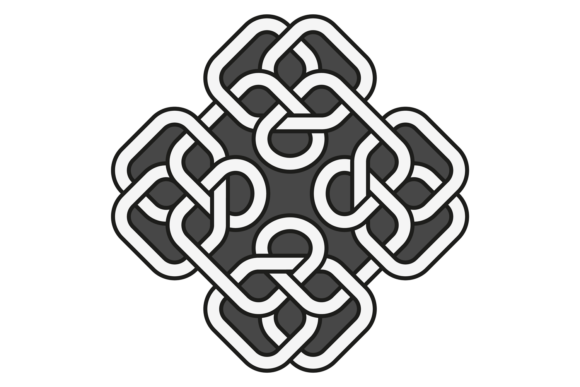
The Gaelic decorative cross is perhaps the most recognizable application of this style. Distinct from the standard Latin cross, the Celtic cross features a ring surrounding the intersection of the arms. When rendered as an endless ornament, the ring and the arms are woven together using complex interlacing patterns. This specific configuration is what separates high-quality heritage designs from superficial imitations. Many low-resolution or poorly drafted vectors fail to maintain the "over-under" logic of the weave, resulting in a flat, confusing image that lacks the depth and rhythm of authentic work.
When evaluating a design asset, look for consistency in the width of the bands and the smoothness of the curves. Authentic Endless Celtic Ornament relies on mathematical precision disguised as organic flow. If the lines appear jagged in an SVG or pixelated in a JPG, the integrity of the endless loop is compromised, diminishing both the aesthetic appeal and the symbolic power of the piece.
Comparing Formats: Vector vs. Raster for Decorative Assets
One of the most critical decisions you will face when sourcing Gaelic Decorati is choosing the correct file format. The availability of a Gaelic decorative cross logo isolated on white background in multiple formats like EPS, JPG, SVG, and transparent PNG offers flexibility, but each serves a different purpose. Understanding these differences is key to ensuring your final output looks professional.
- SVG (Scalable Vector Graphics): This is often the superior choice for web design and digital interfaces. Because SVGs are code-based, they remain crisp at any size, from a favicon to a full-screen banner. For an Endless Celtic Ornament, which relies on fine lines, SVG ensures that the intricate weaving does not blur on high-resolution screens.
- EPS (Encapsulated PostScript): Ideally suited for print professionals, EPS files are the industry standard for large-scale printing, such as signage, apparel, or stationery. If you plan to scale a Gaelic decorative cross for a storefront or a trade show banner, an EPS file allows a printer to resize the image without any loss of quality.
- Transparent PNG: While PNG is a raster format (made of pixels), the "transparent" feature is invaluable for overlaying designs onto colored backgrounds or textured images without a white box surrounding them. However, users must be cautious of resolution; a small PNG will become blocky if enlarged.
- JPG: Generally the least flexible option for detailed ornamentation. JPGs do not support transparency and use compression that can introduce artifacts around sharp lines. They are best reserved for quick previews or photographic contexts where file size is a priority over editability.
When comparing options, ask yourself where the image will live. If you need to edit the color of individual strands or modify the shape of the cross, a vector format (SVG or EPS) is non-negotiable. Raster formats (JPG, PNG) lock the design into a fixed grid of pixels, making modification difficult or impossible without specialized software.
Evaluating Use Cases: Branding vs. Personal Expression
The application of Endless Celtic Ornament varies widely depending on the user's intent. For brand identity, a Gaelic decorative cross logo can convey stability, heritage, and timelessness. Industries such as legal services, heritage tourism, craft breweries, and educational institutions often find these motifs align well with their values. The endless nature of the knot suggests longevity and reliability—traits desirable in a corporate partner.
Conversely, for personal expression, such as tattoo designs or home decor, the focus often shifts to the specific meaning behind the pattern. In this context, the isolation of the design on a white background (as found in many stock resources) is less important than the flow of the lines on the human body or the texture of the material. A design that works perfectly as a isolated logo might need adjustment to wrap around an arm or fit within a circular frame for a pendant.
It is also worth noting the difference between religious and secular applications. While the Gaelic decorative cross has deep Christian roots in Ireland and Scotland, the endless knot itself predates Christianity and appears in various forms across global cultures, including Buddhist and Hindu traditions. When selecting a design for a secular brand, it is advisable to choose ornaments that emphasize the geometric beauty of the knot rather than overtly religious iconography, unless that specific association is intended.
Limitations and Decision Factors
Despite their beauty, Gaelic Decorati and endless ornaments are not a universal solution for every design challenge. There are specific scenarios where these intricate patterns may hinder rather than help.
Complexity at Small Scales: The greatest limitation of Celtic knotwork is its density. An Endless Celtic Ornament filled with tight weaves can turn into an unreadable blob when scaled down for a mobile app icon or a social media avatar. In these cases, a simplified version or a different stylistic approach may be necessary. Always test your chosen asset at the smallest intended size before committing to it.
Cultural Sensitivity: While Celtic art is widely appreciated, using specific historical symbols without understanding their context can lead to misinterpretation. Some knots were traditionally associated with specific clans, regions, or even mourning. While modern interpretations are generally more flexible, thorough research is recommended if the design is intended to represent a specific heritage or community.
Production Costs: If you are manufacturing physical goods, such as embroidered patches or laser-cut metal, the complexity of the Gaelic decorative cross can drive up costs. Fine details may not translate well to certain materials, requiring a simplification of the vector file. A designer may need to thicken lines or reduce the number of intersections to ensure the product is durable and cost-effective.
Making the Right Choice for Your Project
Selecting the perfect Endless Celtic Ornament involves balancing aesthetic desire with practical constraints. If your goal is a versatile digital asset, prioritize high-quality SVG files that allow for infinite scaling and easy color manipulation. If you are commissioning a physical product, ensure you have access to the source EPS file so that manufacturers can adjust line weights as needed.
When browsing libraries for a Gaelic decorative cross logo isolated on white background, look beyond the thumbnail. Examine the preview for clean lines and logical weaving. Check the file specifications to ensure you are getting the formats you need. Remember that a "logo" implies a unique identity; if you are building a brand, consider customizing a stock ornament to ensure it is distinct from competitors who may have purchased the same asset.
Ultimately, the power of Gaelic Decorati lies in its ability to connect the viewer to a sense of history and continuity. Whether used as a subtle border element or a bold central emblem, these endless patterns offer a timeless elegance that few other styles can match. By carefully evaluating the format, scale, and context of your chosen design, you can harness this ancient artistic tradition to create something both meaningful and visually striking for the modern world.