Bouquet of Hearts: Evaluating Digital Paper Art for Romantic Design Projects
In the realm of digital design and crafting, finding imagery that balances whimsical charm with professional utility can be a challenge. The Bouquet of Hearts concept represents a specific niche within stock photography and digital art: a curated arrangement of paper hearts in classic romantic hues—red, white, and pink—intertwined with delicate floral elements. Unlike generic clip art or flat vector icons, this style mimics the texture and depth of physical papercraft, offering a tactile feel in a digital format. For designers, crafters, and content creators aged 20 to 50 who are evaluating resources for Valentine's Day campaigns, wedding invitations, or personal DIY projects, understanding the distinct advantages and limitations of this high-resolution asset is crucial for making an informed decision.
Defining the Aesthetic and Technical Specifications
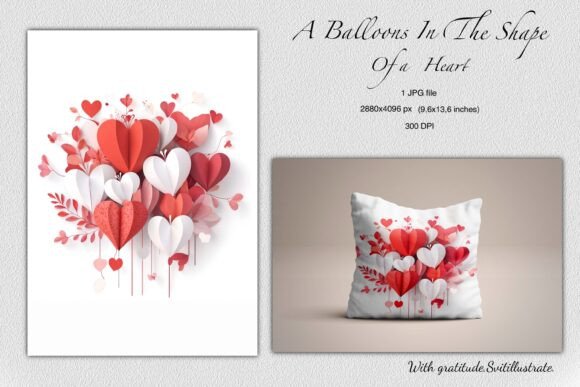
The core appeal of the Bouquet of Hearts lies in its hybrid nature. It combines the clean lines of graphic design with the organic imperfections of handcrafted paper art. The composition typically features a central cluster of hearts, folded and layered to create shadow and dimension, surrounded by soft botanical accents. This specific arrangement avoids the cliché of floating, two-dimensional symbols, grounding the romance in a sense of craftsmanship.
From a technical standpoint, the value of such an asset is determined by its resolution and file structure. A premium version of this artwork is delivered as a high-quality JPG file, often extracted from a ZIP archive, boasting a resolution of 300 DPI (dots per inch). With dimensions around 2880x4096 pixels (approximately 9.6 x 13.6 inches), the image provides sufficient data for large-format printing without pixelation. This specification is a critical differentiator; many free or low-cost alternatives offer only 72 DPI web-resolution images, which degrade rapidly when applied to physical products like greeting cards or posters. The inclusion of delicate floral elements further complicates the image, requiring high fidelity to ensure that fine petals and paper grain do not blur into noise during reproduction.
Comparative Analysis: Digital Paper Art vs. Traditional Alternatives
When selecting visual assets for romantic themes, creators often weigh several options: hiring a photographer for a custom shoot, purchasing physical paper crafts, using vector illustrations, or licensing high-resolution raster images like the Bouquet of Hearts. Each approach carries distinct tradeoffs regarding cost, time, and aesthetic control.
Custom Photography vs. Stock Assets
Commissioning a professional photographer to arrange and shoot real paper hearts offers ultimate customization but comes with significant logistical overhead. It requires sourcing materials, styling the set, lighting, and post-processing. In contrast, a pre-rendered Bouquet of Hearts file offers immediate availability. While you lose the ability to change the angle of a specific fold, you gain consistency and speed, which is vital for meeting tight deadlines for anniversaries or seasonal marketing pushes.
Vector Graphics vs. Raster Textures
Vector files (SVG, AI) are scalable to infinity and ideal for signage or large banners. However, they often lack the realistic texture of paper. Vectors tend to look "clean" and digital, which can sometimes feel sterile for emotional occasions like weddings. The Bouquet of Hearts JPG format captures the subtle grain of the paper and the soft shadows of the floral elements, providing a warmth that vectors struggle to replicate without complex shading effects. The tradeoff is scalability; while 2880x4096 pixels is excellent for most print needs, it cannot be enlarged to billboard size without quality loss, whereas a vector can.
Physical Craft vs. Digital Templates
For DIY enthusiasts, creating a physical bouquet is a labor of love but may not yield a result suitable for mass reproduction. If the goal is to create 50 identical wedding invitations, hand-folding 50 arrangements is impractical. Using a high-resolution digital template allows the creator to print the design onto cardstock or incorporate it into a digital invitation suite, ensuring every recipient receives the exact same high-quality image.
Practical Applications and Use Case Scenarios
The versatility of the Bouquet of Hearts extends beyond simple decoration. Its high resolution and romantic palette make it adaptable across various mediums, though success depends on matching the asset to the right project type.
- Greeting Cards and Stationery: The 300 DPI resolution makes this image ideal for home printing or professional offset printing. It serves as a focal point for Valentine's Day cards, anniversary notes, or engagement announcements. The white and pink tones allow for legible text overlay, a common requirement for typography-heavy stationery.
- Wedding and Event Invitations: For couples managing their own wedding design, this asset provides a cohesive theme. It can be used on save-the-dates, menu cards, or table numbers. The floral elements help bridge the gap between a purely geometric heart design and a traditional floral wedding theme.
- Scrapbooking and Journaling: Digital scrapbookers can integrate this image into layouts commemorating relationships. Because it mimics physical paper, it blends seamlessly with photos of real events, maintaining a consistent "handmade" aesthetic throughout the album.
- Packaging and Gift Decor: The image is suitable for printing on gift tags, box lids, or labels. The charming, artistic style elevates simple packaging, making a homemade gift feel premium. However, users must consider color management; screen colors (RGB) often appear more vibrant than printed colors (CMYK), so test prints are advisable for critical color matching.
- Digital Marketing and Social Media: While the file is optimized for print, it downscales beautifully for digital use. It serves as an eye-catching banner for blog posts about relationships, a cover photo for Facebook pages, or a high-quality background for Instagram stories. The vertical orientation (roughly 3:4 aspect ratio) is particularly well-suited for mobile-first platforms like Pinterest and TikTok covers.
Decision Factors: When to Choose This Style
Selecting the Bouquet of Hearts over other design resources depends on specific project requirements. This asset is the optimal choice when the project demands a balance of romance and craftsmanship without the budget for custom photography. It is particularly effective for audiences who appreciate the "maker" culture—the trend toward handmade, authentic, and textured visuals over sleek, corporate minimalism.
However, there are scenarios where this might not be the best fit. If a brand identity relies on ultra-modern, flat design with neon colors, the soft, pastel, and textured nature of paper hearts may clash. Similarly, if a project requires infinite scalability for massive outdoor advertising, a vector-based solution would be superior. Additionally, users looking for editable layers (e.g., moving a specific flower) will find the flattened JPG format limiting compared to a layered PSD or AI file.
Maximizing Value Through Versatility
To get the most out of a single high-resolution file, creators should view it as a foundational element rather than a final product. The Bouquet of Hearts can be cropped to create circular badges for stickers, desaturated for a vintage black-and-white look, or used as a watermark texture. For web designers, it can serve as a hero image with a dark overlay to ensure text readability. For those creating personalized gifts, the image can be transferred onto canvas, ceramic mugs, or decorative frames, leveraging the 300 DPI clarity to maintain detail on various surfaces.
Ultimately, the decision to utilize the Bouquet of Hearts comes down to the desired emotional resonance. It offers a visual language that speaks of care, effort, and traditional romance. By understanding its technical strengths—specifically the high resolution and realistic texture—and acknowledging its limitations regarding editability and scale, designers and hobbyists can effectively integrate this resource into a wide array of creative projects, from intimate keepsakes to broad commercial designs.